THE TAKEAWAY
An attractive energy rate does not establish a technically deliverable or commercially viable project.
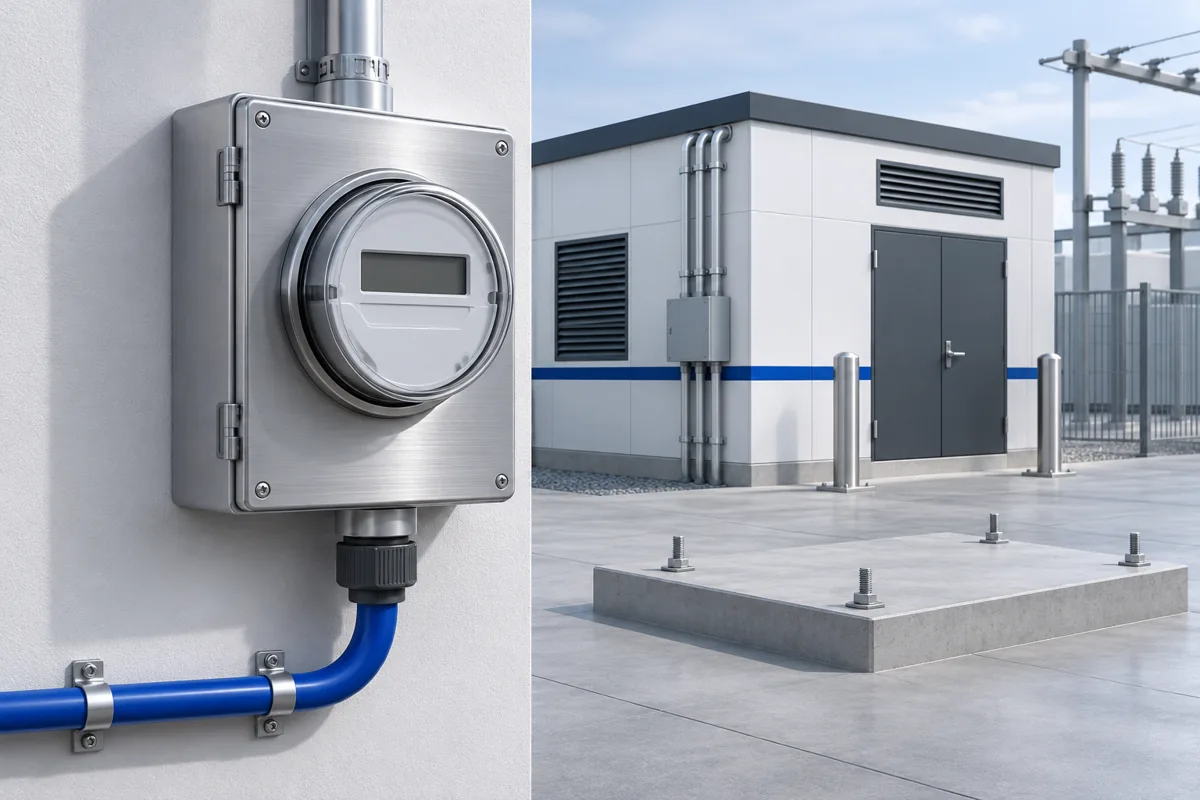
Use this guide to: evaluate an energy or facility decision using explicit boundaries and assumptions.
A power quote is the beginning of a site assessment. The commercial question is whether the location can deliver the required service, on time, at a total cost a customer will support.
Start with the promise to the customer.
A site proposal might lead with land area, available megawatts and an attractive energy rate. Each is relevant, but none establishes the service the site will sell. Training workloads, latency-sensitive inference and ordinary enterprise IT can impose different demands on networking, cooling, equipment and location. Our analytical starting point is the intended customer task and the service commitments it creates.
Power has a date and conditions.
An offer for future connection is different from power available today. A headline capacity figure needs a boundary: is it connection capacity, facility demand or IT equipment capacity? The IEA's Energy and AI report discusses grid bottlenecks and constraints on expanding data-center supply. [1] Our inference is that a credible site assessment should document the connection date, usable capacity, constraints and the complete tariff.
Follow a tariff through the facility.
A facility consumes energy beyond its IT equipment. The Green Grid defines PUE as the ratio of total facility energy to IT equipment energy. [3] The teaching example in our briefing holds IT capacity at 1,000 kW and average electrical load at 80%. Changing the assumed tariff from $0.06 to $0.09 per kWh and annual PUE from 1.30 to 1.60 changes the calculated annual energy charge from $546,624 to $1,009,152.
These are constructed assumptions, not observed market offers. Both inputs change, and the result is an energy-only comparison. A complete cost model would also need capital spending, financing, fixed and demand charges, taxes, maintenance and other operating costs. A low energy price cannot answer those questions on its own.
Capacity does not establish paid use.
The example's 80% factor describes average electrical draw. It says nothing about contracted occupancy, billable compute hours or customer revenue. Equipment can draw power while doing work that produces no billable output. When assessing a business, separate physical consumption, useful technical work and the commercial unit sold to a customer.
The order of evidence matters.
Our proposed review has three gates. First, define the customer requirement and the service to be delivered. Second, confirm a technically suitable facility with dated power, equipment and network evidence. Third, test total costs against supported demand and revenue assumptions. Work through unresolved dependencies before treating a large capacity number as a commercial opportunity.
AI Keeper view: the useful starting question is what this particular location can reliably deliver, by when, and for whom. Its electricity price becomes meaningful inside that answer.
Explore the assumptions in the energy calculator ↗
Sources & scope
- IEA — Energy and AI (2025), Executive summary ↗
Background on electricity supply and grid constraints; not a live forecast for a specific project.
- The Green Grid — Power Usage Effectiveness ↗
Definition of PUE. Scenario inputs on this site are our own illustrative assumptions.
Our analysis and practical questions are editorial interpretation. Sources provide the stated background, not an endorsement of our conclusions. This material is educational and does not assess a specific investment or establish a legal requirement.
Suggest a correction ↗