THE TAKEAWAY
Compare dated, usable power at a defined boundary. A capacity announcement is a starting point for questions.
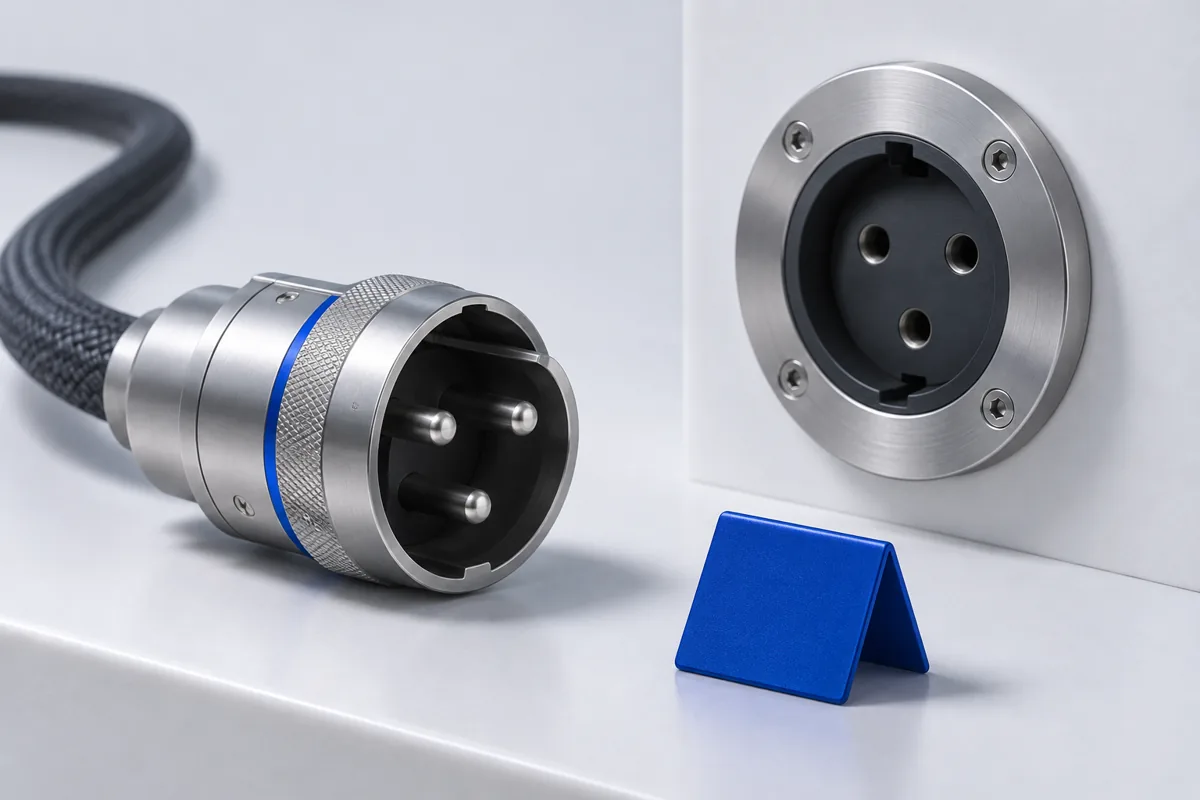
Use this guide to: evaluate an energy or facility decision using explicit boundaries and assumptions.
The missing dimension in a capacity claim
A site can have a large proposed connection and no immediately usable supply. Another can have a smaller live connection that supports an earlier first phase. The two propositions cannot be compared by megawatts alone. Write the capacity, location, delivery date and conditions in the same sentence. If one element is unknown, keep it visible as an unresolved dependency.
The IEA's 2025 Energy and AI report identifies grid constraints as a potential obstacle to data-center expansion. Our practical interpretation is to treat the connection schedule as a core project input. It belongs beside equipment delivery, commissioning and customer commitments, rather than in a footnote to an energy-price comparison.
Define the electrical boundary
Ask what the quoted number measures. A utility connection, the facility's total demand and IT equipment demand describe different boundaries. A promise of 10 MW at the connection does not establish 10 MW of IT capacity. Cooling and other facility systems consume electricity too. The relevant allowance depends on the design and operating conditions.
PUE expresses total facility energy divided by IT equipment energy. An assumed annual PUE can support an energy scenario, but it is not a substitute for an engineer's peak-demand assessment. Annual energy, instantaneous demand and redundant installed capacity should remain separate lines in a project model.
Build a dated evidence register
Use four columns: the claim, the document supporting it, the responsible party and the next decision date. Record whether a connection is proposed, offered, contracted or commissioned. Ask which upstream works and payments must be completed, who carries delay risk and what remedies actually exist. Do not upgrade a preliminary discussion into a firm delivery commitment.
A useful register also identifies what would invalidate the schedule. A transformer delivery, permit or network reinforcement may control the first revenue date. When a dependency moves, update the commercial model alongside the construction plan. That makes the effect of delay explicit before additional spending becomes difficult to reverse.
Compare two paths, not two headlines
Consider two hypothetical sites with the same customer requirement. Site A has a lower energy rate but an unresolved connection date. Site B has a higher rate and documented near-term capacity. There is no universal winner. The comparison needs the customer's deadline, the cost of waiting, the confidence of each schedule and the cost of changing course.
Run an on-time case and a delayed case for each site. Keep tariff assumptions unchanged when testing the schedule, then test price separately. This prevents a cheaper tariff from concealing an assumed earlier opening. A good sensitivity analysis tells you which unresolved fact deserves the next hour of diligence.
The question to take into the next meeting
Ask: what evidence would allow us to commit to serving this workload by this date? The answer may be a signed connection offer, an engineering study or a customer specification. Identify that document before requesting a more elaborate forecast. The next useful step is usually the one that reduces the uncertainty controlling delivery.
Sources & scope
- IEA — Energy and AI (2025), Executive summary ↗
Background on electricity supply and grid constraints; not a live forecast for a specific project.
- The Green Grid — Power Usage Effectiveness ↗
Definition of PUE. Scenario inputs on this site are our own illustrative assumptions.
Our analysis and practical questions are editorial interpretation. Sources provide the stated background, not an endorsement of our conclusions. This material is educational and does not assess a specific investment or establish a legal requirement.
Suggest a correction ↗