THE TAKEAWAY
Ask who controls each layer and what happens if access changes. The geography of a building is only one part of that answer.
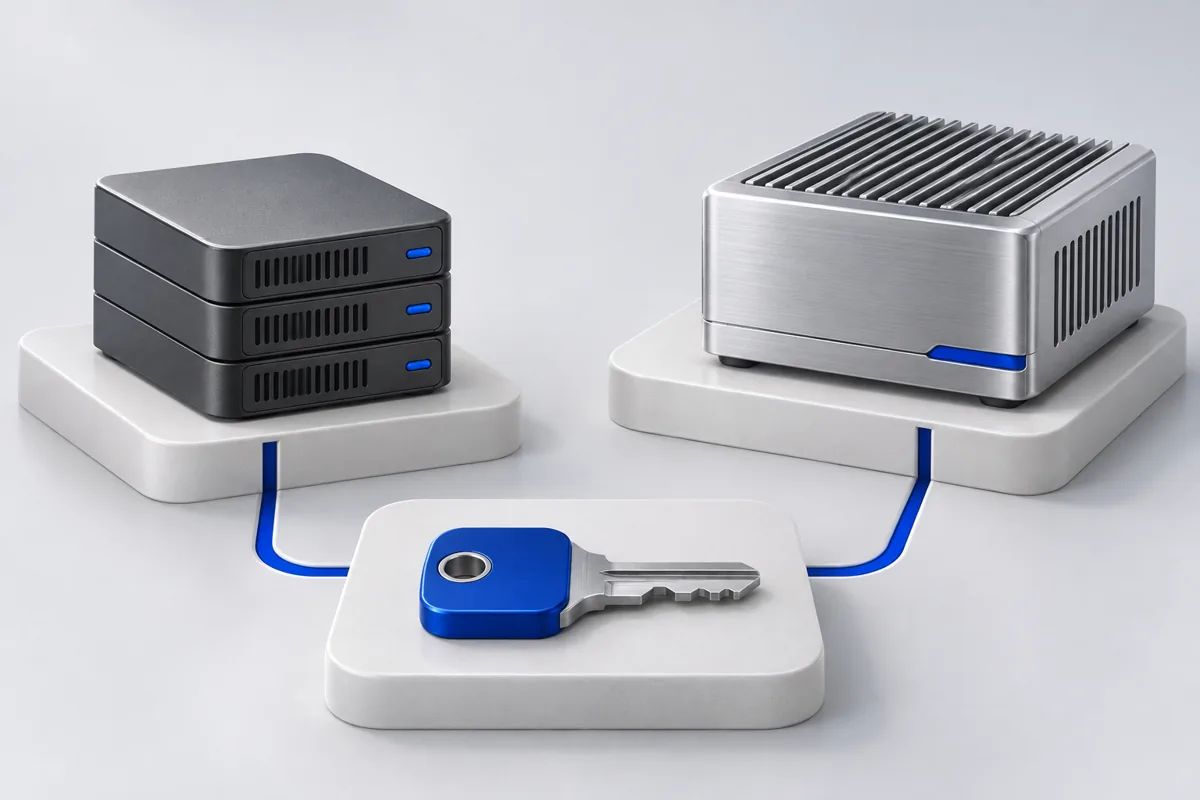
Use this guide to: separate location, access and operating control across an AI system.
Give the word a boundary
Sovereignty can refer to where information is stored, who operates a service, who controls a model or whether equipment can be maintained. These are related but distinct questions. Start by naming the objective: continuity, confidentiality, domestic capability, public procurement or something else. A broad label cannot establish whether a specific design meets that objective.
The framework here is an analytical aid. It does not interpret any country's law or determine whether a particular deployment satisfies a legal requirement. Those assessments need current rules, contracts and qualified advice in the relevant jurisdiction.
Follow the layers
At the physical layer, ask where the facility and network connections are located. At the equipment layer, ask who supplies and maintains servers and networking. At the compute layer, ask who controls scheduling and access. At the model layer, ask what rights and dependencies apply to the model and its tooling.
At the application layer, identify who can read inputs and outputs, change permissions and stop the service. Then inspect the commercial layer: ownership, financing, licences and operating agreements. A claim of control should specify which of these layers it addresses.
Separate location from control
Consider a hypothetical application running in a domestic facility but relying on a remotely operated model service. The building's location does not describe the model's access conditions. Conversely, locally running model weights do not establish that replacement hardware, updates and specialist support are independently available.
Neither setup is automatically preferable. The choice depends on the objective and the alternatives. Make the dependency explicit, then test whether it is acceptable. This is more informative than treating local and foreign as complete descriptions of an operating system.
Use scenarios instead of slogans
Build a small scenario table. What if model access changes? What if replacement hardware is delayed? What if data cannot be transferred under the chosen arrangement? For each case, identify the service affected, the proposed response and the time needed to restore acceptable delivery.
Use dated primary documents for any policy claim. Separate enacted rules, proposed changes and your interpretation of their possible consequences. This article offers no live assessment of export controls or country eligibility. The practical point is that policy assumptions need owners and review dates, just like technical assumptions.
Make the trade-off visible
Greater control over one layer can require more spending or new dependencies elsewhere. An operator may trade convenience for control, or a broad supplier ecosystem for a narrower one. A useful assessment explains that trade-off in terms of a specific service, rather than promising independence in the abstract.
Sources & scope
This is an original AI Keeper explanatory framework. Hypothetical examples are constructed to explain the method; they are not reported company results or market quotes.
Our analysis and practical questions are editorial interpretation. Sources provide the stated background, not an endorsement of our conclusions. This material is educational and does not assess a specific investment or establish a legal requirement.
Suggest a correction ↗